Friday, October 31st. 5pm KEYNOTE by Geoffrey Whitehall.
Saturday, November 1st. 10am to 4pm.
In La Haine, Mathieu Kassovitz’ 1995 film about the Paris ghettos (banlieues), one of the three main characters voice-overs about “a man who falls from a fifty-storey building. As he falls, he keeps repeating to himself to reassure himself: so far so good, so far so good, so far so good. But the important thing is not the fall, it’s the landing.” This story about fifty storeys evokes for us, today, thirty years later, our boiling-frog ecology and political economy in freefall. We are heading into disaster, one fraction of a celcius at a time, while our accelerationist leaders live in the short term: “so far so good.” Another thing we see is the burning house: what do we do when the house is burning down? It doesn’t make sense to do anything, right? What if, instead of doing nothing, we carried on as usual, doing “everything with care and precision, perhaps even more diligently” (Agamben 1)? In theory’s freefall, what is there left for us to do but to continue diligently, with care and precision, to theorize? And isn’t theory itself always already somehow dead anyway, a “writing of/from[du] disaster” (Blanchot) after the freefall, once the “owl of Minerva” (Hegel) has already flown away — where our language is dying like the word “surreal,” which disappears in its overuse?
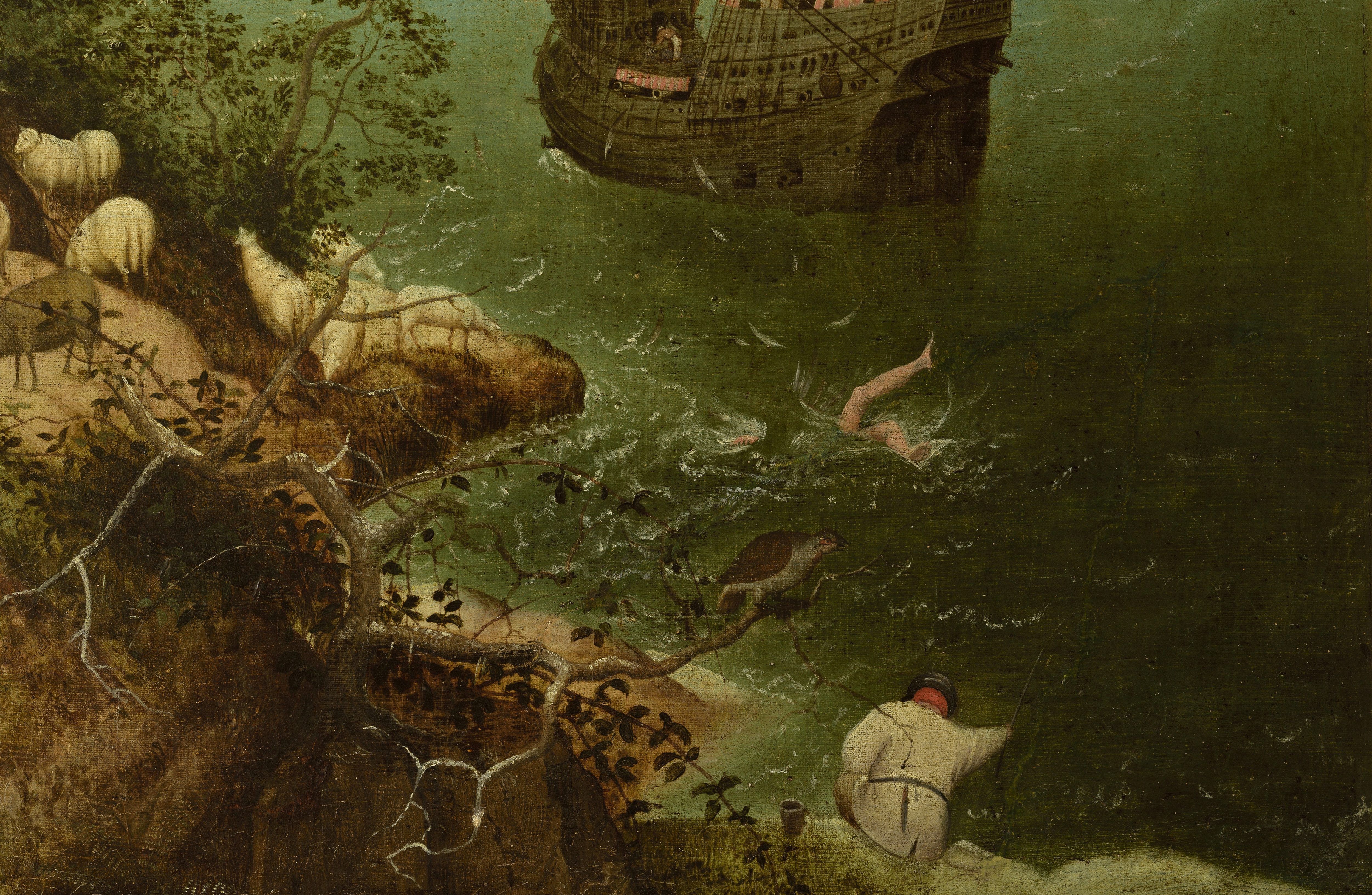
Last year, for the inaugural Fall of Theory that replaced a missed SOT6, we contemplated the end of theory — its death, its renewal, its possible future, its ongoing relevance. “Theory is Dead: Long Live Theory!,” James said. The idea of a “Fear of Flying” invokes a double fall: not just the potential for failure, one which always accompanies theory, which likes to fly to abstract heights (when you’re high on the jetfuel of theory, the fall is long and everything seems to be going well until you land); but also, in our diligent care and precision, that fine line between knowledge and ignorance in that freefall, which is the original flaw of potentiality or thought, between thinking everything is ok and being aware that things aren’t good. And both of these falls might make us renounce theory, throw in the towel, so to speak. However, to theorize requires the courage of thinking, which comes along with parrhesia and the “courage of truth” (Foucault), for there is no courage without fear or risk of damage (hurting or being hurt by the other). Flying is dangerous. A Fear of Flying therefore invites us instead to fly, but to own that fear, to hold it as our companion, lest we face Icarus’ fate. For theorists are the brave ones today, who persist when all is “melting into air” (Marx and Engels), when the techno-rational-utilitarian imperatives of our times disregard theory as a luxury, as self-indulgent and useless. At a time when precisely it is important to take a screenshot of our freefall.
This second Fall of Theory takes place on Friday October 31st, starting with a KEYNOTE by Geoffrey Whitehall, followed by the symposium on Saturday, November 1st. We’ve invited theoretical flights, in an age of diminished theory, and in the spirit of the Summer and Fall of Theory. Participants bring their usual zany, odd, weird, scary, unacceptable and uncanny ideas, ones that they would never present at the usual conferences and congresses; they will involve some play, and make their presentation a “performance” in some way. Finally, Fall of Theory (like all Summers of Theory) is a friendly space, and the event is its own goal.

References
- Agamben, Giorgio. When the House Burns Down. London: Seagull, 2023.
- Blanchot, Maurice. L’Écriture du désastre. Paris: Gallimard, 1980.
- Foucault, Michel. Le courage de la vérité. Paris: Gallimard/Le Seuil, 2009.
- Kassovitz, Mathieu. La Haine. 1995.
- Marx and Engels, Communist Manifesto.
 seismopoetics
