Participants
- Erin Chewter: “Stars Down to Earth”: The Frankfurt School, Sky-Woman, and Theorizing in the Freefall
- Anthony J. Gavin: The Fall of Asterion; or, Images of Monstrosity and Redemption
- David Gifford: Chance of Shadows
- Rebecca Johnson: Hard FOT ( Falling and Floating): Thoughts on the persistence of hope in the work of theory
- James R. Martel: Theory is Dead: Long Live Theory!
- Leah McInnis: How to how to better
- Loumille Métros: Fill Officer Theory
- Sara Ramshaw: Fallen Theorist
- Valerie Salez: I’d Rather be Snow Shoveling
- Mark Zion: Gravitas and Gracelessness: Theory’s (Mis)Fortunes in the ‘Community Impact’ Winter
Erin Chewter: “Stars Down to Earth”: The Frankfurt School, Sky-Woman, and Theorizing in the Freefall
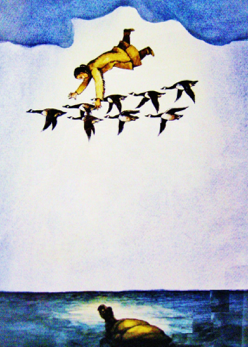
In this presentation the Haudenosaunee creation story of Sky-Woman’s fall to Turtle Island will be considered alongside Adorno’s analyses of a Los Angeles astrology column to reflect on how the early Frankfurt School’s methodological interventions against the positivist/occultist thrust in the Euro-Western scientific tradition might suggest a model for settler scholars committed to the decolonization of North America. After acknowledging one’s place high up in an invasive tree of dominating knowledge, might we then cut out the branch from underneath ourselves and learn to embrace theorizing in the fall? Indigenous critical theories of “grounded normativity” suggest that any impending impact may be more generative than feared.
Erin Chewter is a Masters student in the School of Languages, Linguistics, and Cultures (Germanic and Slavic Studies).
Anthony J. Gavin: The Fall of Asterion; or, Images of Monstrosity and Redemption
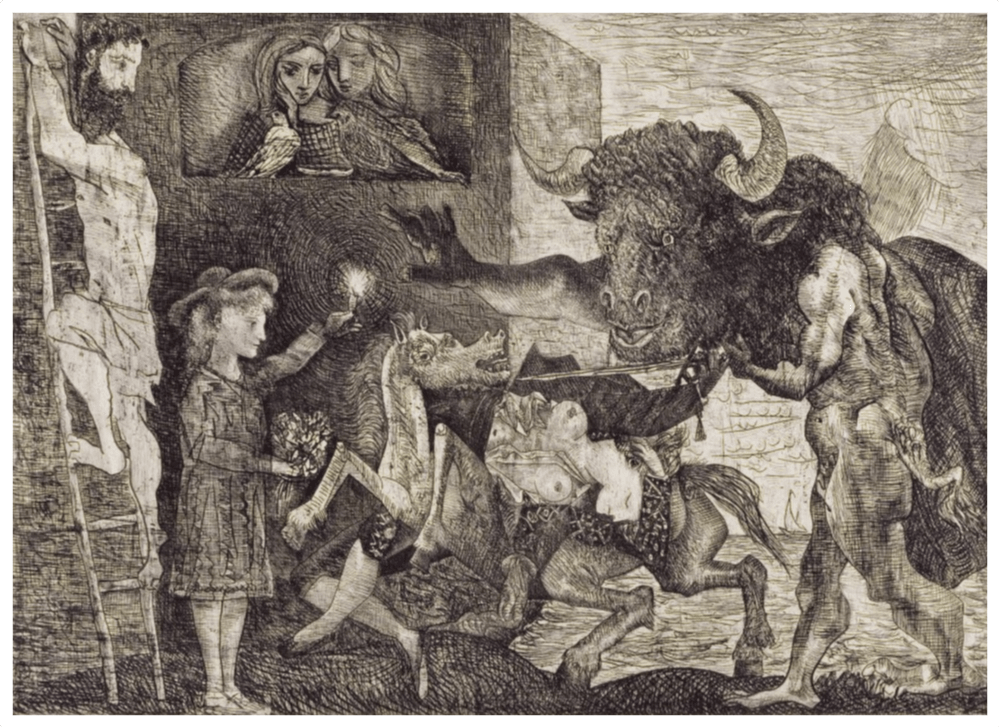
A short story by Jorge Luis Borges, “The House of Asterion” (1949), is written from the perspective of the eponymous Minotaur of Greek legend. Asterion awaits his “redeemer,” Theseus, who ends up playing the part of the monster by slaying a defenseless victim. Borges’ retelling can be interpreted as a posthuman allegory, both for its portrayal of the mythic monster as a sympathetic figure and its suggestion that classical humanism has mutated into something monstrous. Yet Borges’ ambiguous ending leaves the reader to ponder the relationship between monstrosity and redemption: can the monster be redeemed or a redeemer? This presentation gathers the loose threads laid by Borges and weaves them together with images of monstrosity from Pablo Picasso to the TV-series, From (2022 – ), to ask how monsters might be the redeemers of a monstrous post-humanity.
David Gifford: Chance of Shadows
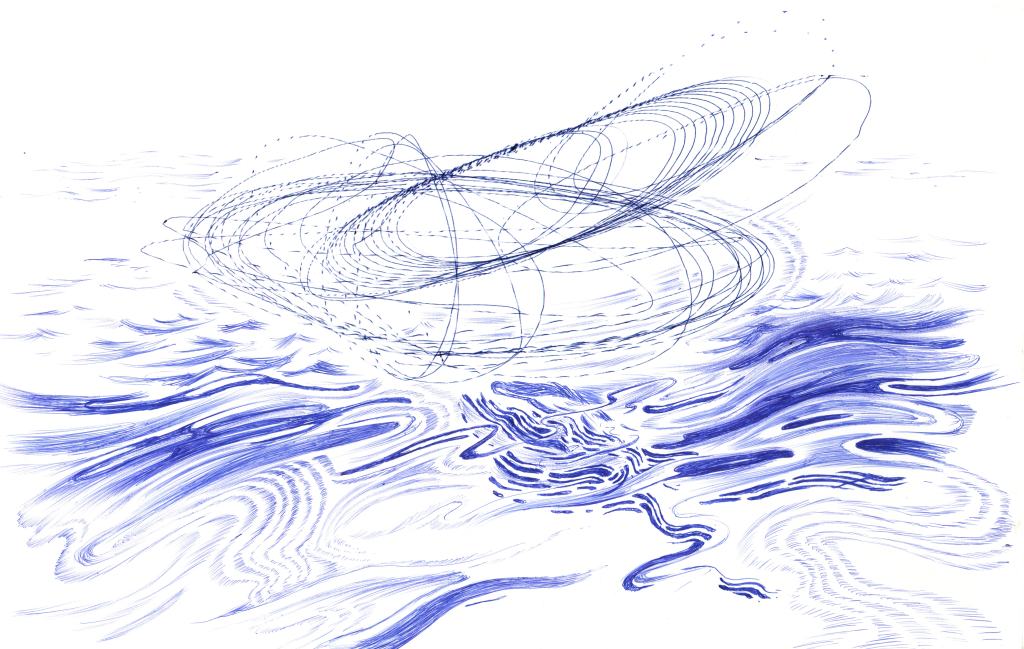
Reflections on a tentative hypothesis in two early kite designs. The tetrahedral kite by Alexander Graham Bell and an early iteration of Lawrence Hargrave’s box kite are presented to implicate drawing with theory to describe what cannot be seen. Gifford will attempt to fly a kite while reading from his text Chance of Shadows, premiering in the seventieth issue of PUBLIC: Art/Culture/Ideas, Fall 2024, PUBLIC70: The Weather.
Rebecca Johnson: Hard FOT ( Falling and Floating): Thoughts on the persistence of hope in the work of theory
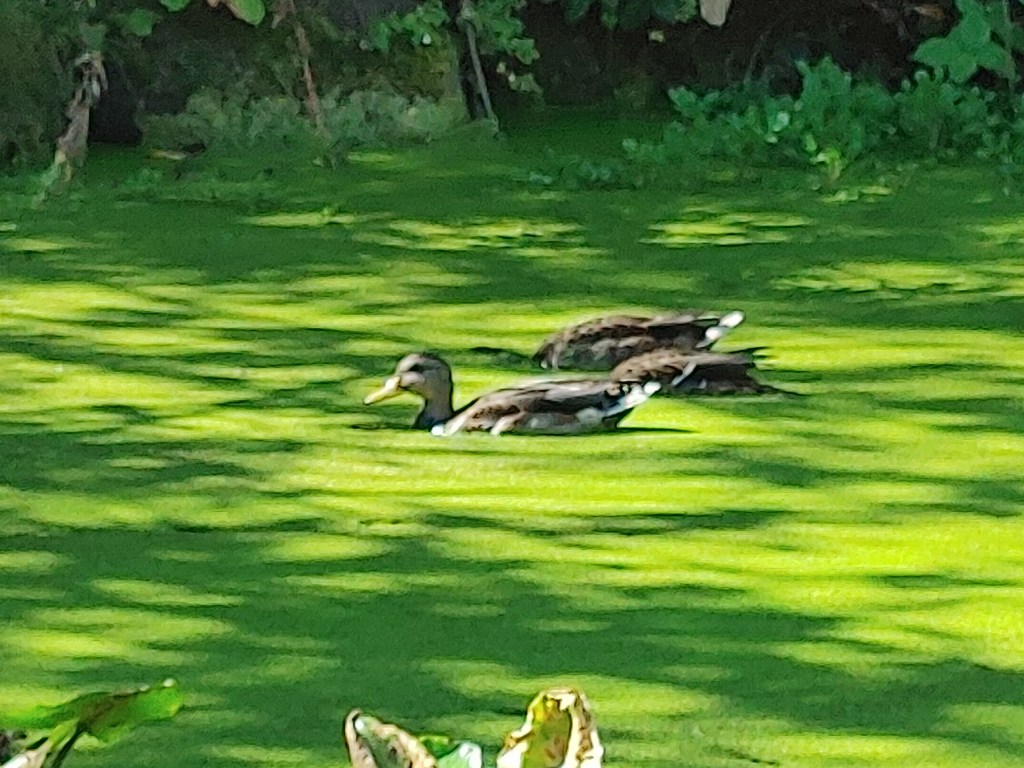
This image might get at the place of images and seasons and interpretation, and ground and groundlessness and transformation.
James R. Martel: Theory is Dead: Long Live Theory!
James Martel is a professor in the Department of Political Science at San Francisco State University. He teaches courses in political theory, continental philosophy, anarchism, post-colonial theory and theories of gender and sexuality. He is the author of eight books, most recently Anarchist Prophets: Disappointing Vision and the Power of Collective Sight (Duke University Press, 2022).
Leah McInnis: How to how to better
How to how to better is a new conceptual text-based artwork created in reference to a list that Swiss artists Peter Fischli and David Weiss published in 1991. Their list, titled “How To Work Better,” was copied exactly from a poster they saw hanging in a ceramic factory in Thailand, and then later reproduced on the side of an office building in Zurich. It quickly became a sort of cult-favorite for artists and designers due to its simplistic innuendo and intentionally bad design.
Decades later, a curator named Anthony Huberman published his own list titled “How to Behave Better,” and invited readers to post it in their offices. In keeping with this tradition of reworking and presenting lists of behavioral directions that seem to slip between irony and sincerity, I am pleased to present my own list of how-to’s.
How to how to better is about artistic research. It could be a manifesto; aspirational guidelines for research creation within academia. Perhaps they are jokes told in earnest masquerading as institutional critique. Presented as an editioned double-sided print, this new list is available for free as a takeaway or as a digital download. Hang it above your desk or staple it to your studio wall. I hope that you look at it and think of your own ways of how to how-to-how-to-better better.
Bio:
Leah McInnis is an interdisciplinary conceptual artist with a material practice. She is currently a PhD student in the faculty of Media, Art & Performance at the University of Regina. She earned an MFA from the University of Victoria (2018) in addition to a BFA from Emily Carr University of Art + Design (2013) and a BA from the University of Alberta (2011). Alongside creating and exhibiting projects, McInnis teaches drawing and painting at the Vancouver Island School of Art. She currently lives and works on Treaty 4 Territory in Regina, SK. www.leahmcinnis.com
Loumille Métros: Fill Officer Theory
Loumille is the “Fill Officer” for the day, filling in phil-ossifically for where there are gaps.
Sara Ramshaw: Fallen Theorist
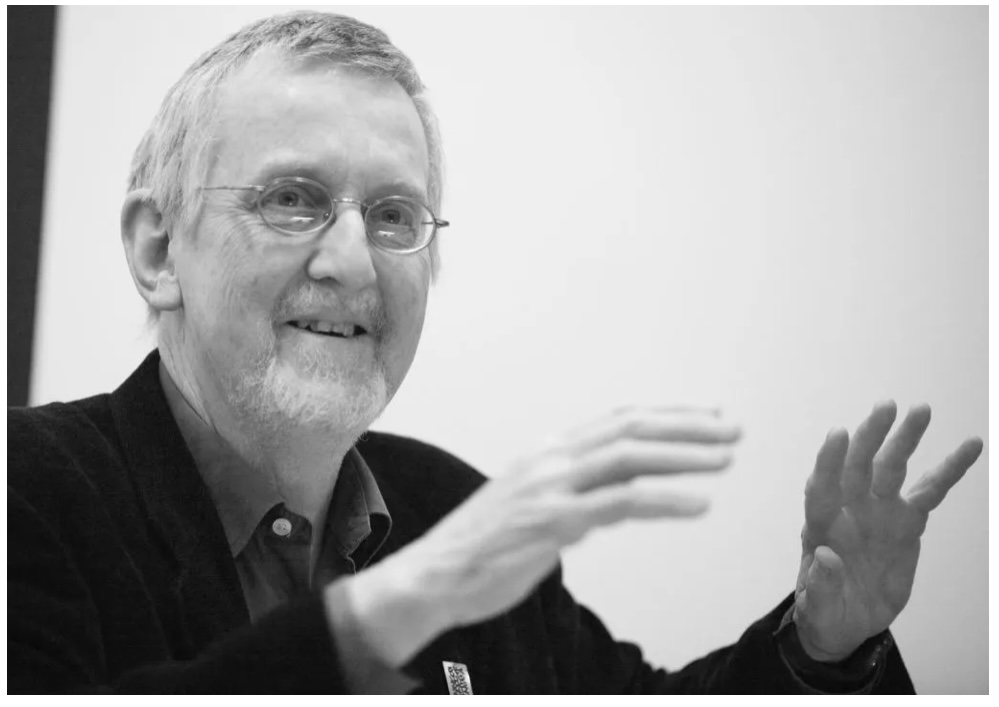
I will be speaking about the “Fallen Theorist,” my late PhD supervisor Peter Fitzpatrick, who would have been 83 on Nov 2.
Sara Ramshaw is Professor of Law and Director of Cultural, Social and Political Thought at the University of Victoria. In her spare time she acts, directs and is the President of Lawyers on Stage Theatre Society.
Valerie Salez: I’d Rather be Snow Shoveling
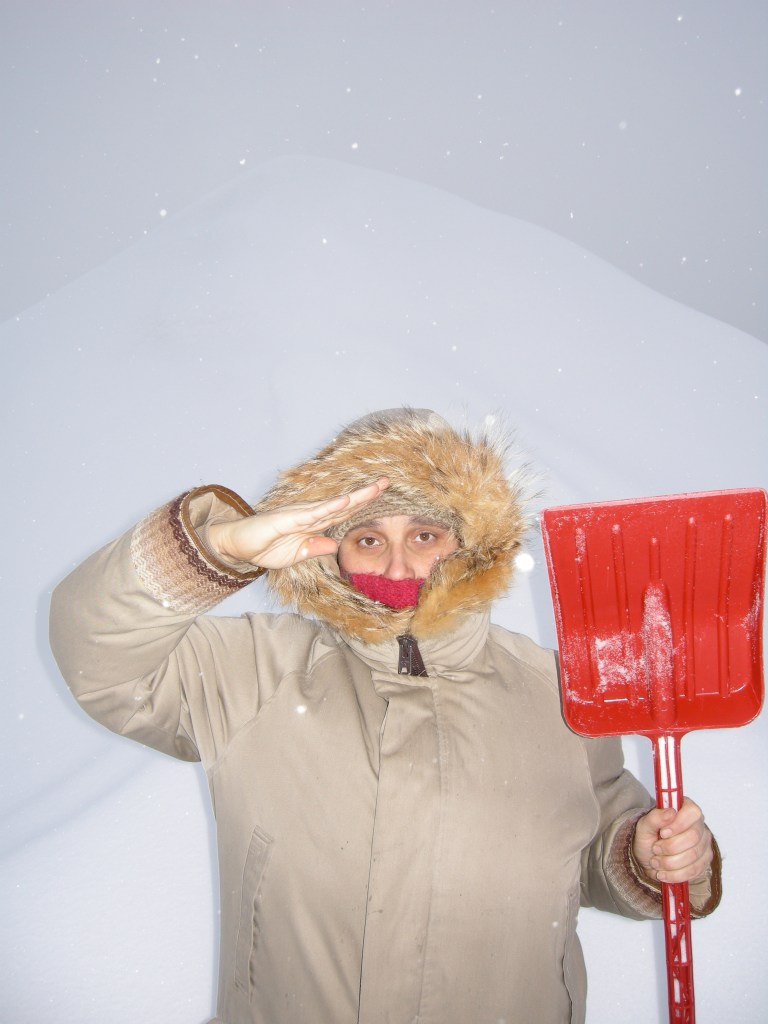
Snow shoveling as an artform has the potential to challenge notions of labour, to create havoc thru acts of phycological warfare, and challenges high artforms and what constitutes what an artists tools and mediums.
Valerie Salez is an anti-disciplinary artist whose practice includes performance, video, photography, sculpture, installation, and collage.Examples of her work can be found at https://www.valeriesalez.com/
Mark Zion: Gravitas and Gracelessness: Theory’s (Mis)Fortunes in the ‘Community Impact’ Winter

Today the space for theoretical inquiry that is not tied in advance to a social (pseudo)problem predetermined by the state has all but disappeared. Without an audience needing to be convinced, toothless high profile philosoraptors no longer even bother to maul ‘difficulty’ in The New Republic. One can complete many degrees in the Humanities without a single ‘theory’ course. When these courses exist, they are often tied to a particular activist exigency (Adorno’s domain of ‘actionism’), paradoxically instrumentalizing the domain of anti-utility. This Halloween, is anything to be learned from (gracelessly) diffracting Poe’s “The Fall of the House of Usher” with the Fall of the House of Theory, with a bit of Simone Weil peppered in to lend gravity? It’s theoretically viable.
Mark Zion teaches Green Legal Theory in a Law faculty. An anti-Zionist, antinomian fan of The Ignorant Schoolmaster, he’s been down so long he doesn’t know what ‘up’ looks like.
 seismopoetics