Participants
Hélène Cazes: Flying outside the box (intermission)
Some flee rather than fight, some run free, they may have wings or things with feathers, others desperately flap their arms, there has been some talk about levitation; teleportation was made up too, while celebrities of all stripes were ascending in glory, sitting in fire chariots, riding brooms. Personally, I am more prosaic about flying. ‘Flight’ sounds treacherously ambiguous. Often, it does not end well. For my flying, no fearing, no falling, no melting, no drowning. It sort of happens to me when trust allows sleep. I think it’s akin to wearing winged sandals, standing, held by my gaze, advancing on clouds of dust, or breaths of wind. So light, so swift, over the ground, over undulating spikelets and blades, silent wavelets and unfurling rolls. Vertigo will come later, along with incredulous regret, as I’ll wander back inside labyrinths. Boxed pinned butterfly, or fallen moth. Am I the flying roamer of seamless azure or that dizzy earthling trekking in endless hallways leading nowhere? Or again, the plowing peasant looking down?
For I was up there, with Daedalus, Phaeton, and Icarus. Many were looking up : Hildegarde, Christine with her wise Ladies, Leonardo da Vinci, Andrea Alciato, Girolamo Cardano, Brueghel, Auden I recognized. I was gently floating , the Pea was sauntering, we were there, up high. Fearing only the anticlimax, the falling awake into oblivion. Little souls frightened of not flying, of confined spaces, boundaries, we’ll fall entrapped in contradiction and doubt and whatever. Losing it, the thread out of the maze. And, see, Earth on fire and smoke, allegories would vanish, sons thrown to pyres, oceans, abysses by their very fathers. I am there too. But what now? We’re burnt ? Burning? Us of little faith… But listen, isn’t it said somewhere that fear will give you wings, that there is no limit, that yes, we can. But, but… Say, let’s forget the fall, and focus on the flying. Let’s go back up there. Just for a while. Please.
Hélène Cazes has met the Pea in 2022. Ever since, they have teamed for explorations outside of the maze, away from academic positions and offices. They are grateful for their welcome at SoT and FoT. Dr. Hélène Cazes had trained and taught in many places ( see https://onlineacademiccommunity.uvic.ca/helenecazes/ about many happy, studious years in the learned company of Classics, humanists, poets, students, and computers.) The young, persistent, demanding Pea, who mistook her for a Princess, has settled in her memory palace. The Pea himself is too young to have a bio. FoT 25 is their second joint contribution to a University event.
David Gifford: Flight 663
Act 1. Control to Flight 663, ready for departure runway one.
Wind two-seven-zero at five knots, cleared for takeoff.
Act 2. “Rotate, approaching V1”, (pull back on the yoke and raise the nose), “positive rate, gear up.” (Move the landing gear lever to the “up” position.)
Act 3. On board services will be provided.
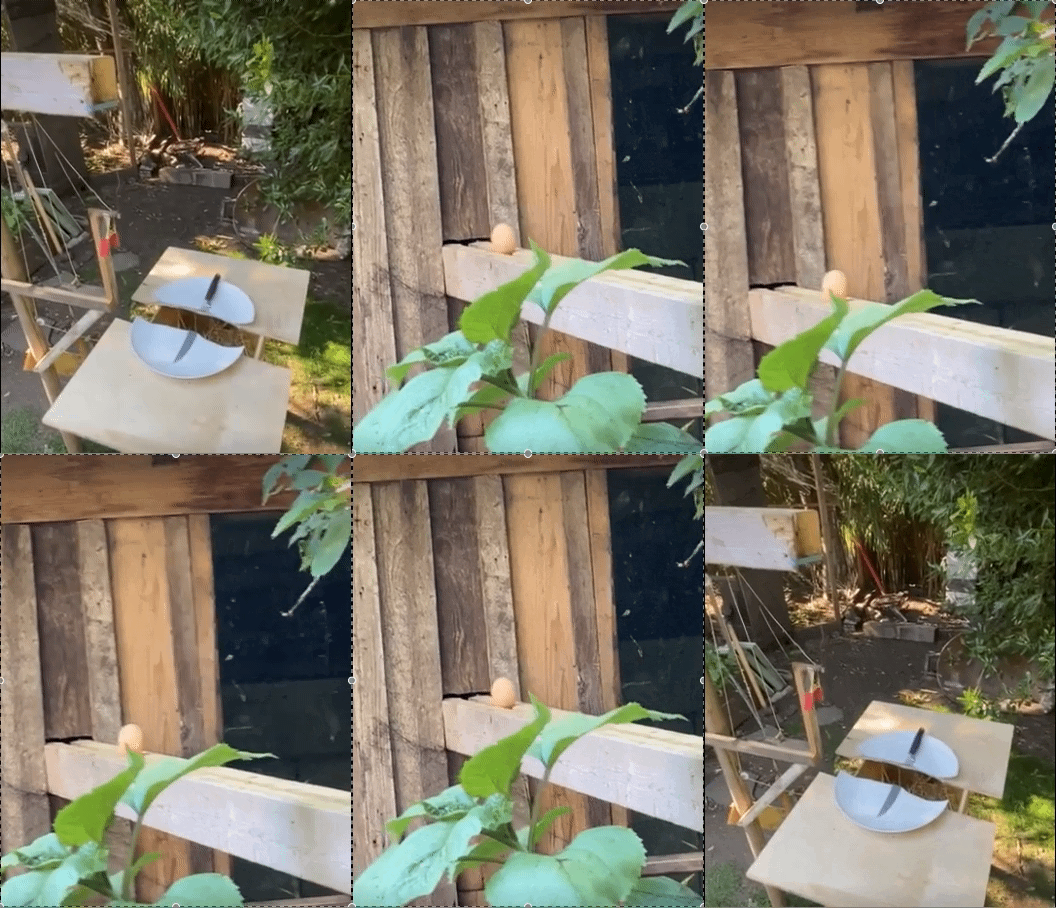
David Gifford makes Rube Goldberg Machines in his backyard modelling the global, inevitable, cumulative and irreversible. His further transgressions with gravity will be illustrated in the premiere of his latest assembly for FOT2FOF, of which the first cause is an apple falling from a tree.
Loumille Métros: Becoming an Antenna

A thrilling manhunt for @lɛshakal, member of the Intellectual Dark Web with connections to Alexander Dugin, Vladimir Putin’s key thinker. From Mauritius to Tofino, to find him (alias Jan-Sored Elimē) will require intercontinental flights, free thinking, daring, and lots of triangulation!
K Nam: A Chang (ช้าง) Is Gonna Come

Wading through the motifs springing to mind as I contemplated my own fear of flying – and of falling, of failing, of discovery – the steadfast elephant visited and stayed with me. Not a creature one would ordinarily associate with flight, nor light weight, I found her presence intriguing, and let her graze around while I endeavoured to capture the lessons she brought on canvas.
Edith Skeard: Nought, nil, nada; Zero and The Poetics of the Fool

I am pondering zero; I am pondering the fool. What is it about the hapless caricature of folly that captures my mind? I am learning about imaginary numbers with my partner, at the centre of every graph exploring multiplicitous planes is the ripe, round zero. How did the zero come to be associated with the fool? A card within the major arcana which has a rich history in its own right?
The fool, our recusant subject falls away from others, the disruptor, the mystic, the unaware – wandering into the valleys and peaks of unknown places because his presence is a deviation from our tenuous social bonds. The fear of the fool is also the fear of where the path may lead. The suspension tied up in hegemony like a familiar blanket, is countered by the figure unconcerned by familiarity. The fool is a manifestation of the ontological discontinuity which is inherent to us and all things. Here then, I reach for Blanchot, Bataille, Mohaghegh, Rousseau, and others to explore the dual nature of the fool as both ripe with potentiality and dissent.
Edie Skeard is a cross-disciplinary artist, woodwind player, and composer. They are all tied up in ontology – specifically the social functions of empathy and ethics. They are from Treaties 4 and 6 in Saskatchewan, Canada. They are currently based on unceded lək̓ʷəŋən Traditional Territory – also known as Victoria, BC, CA, where they are an MFA candidate at the University of Victoria in Visual Arts. They previously studied at the University of Regina, Saskatchewan, receiving a BAhons in Philosophy (Ethics) and a BFA in Visual Art (Printmaking).
Edith’s website: https://www.edithskeard.com/
Geoffrey Whitehall: Falling for Kant: On the Impossibility of Global Resistance
In this presentation, Geoffrey explores the impossibility of global resistance as a guide to rethinking the concept of resistance itself. He looks at the problem of limits and its relationship to the global and to resistance. We are indebted to Kant for this problematic. Geoffrey concludes by inviting a discussion about some alternatives that resist traditional state centric forms of resistance.
Bio: Geoffrey Whitehall is Professor in the Department of Politics and is faculty in the Social and Political Thought Graduate program at Acadia University where he teaches at the crossroads of Political Theory and International Relations. His research covers the general topics of Sovereignty, Resistance, and Aesthetics. He has published on diverse topics like Transversality and Movement, Science Fiction and Political Imaginaries, Music as Political Theory, Sovereignty and Pre-emption, Bio-politics and Pandemics, Animal Resistance, and Indifference and Migration.
Mark Zion: Difference Engine Trouble: Falters, Flails, Frights, Flights
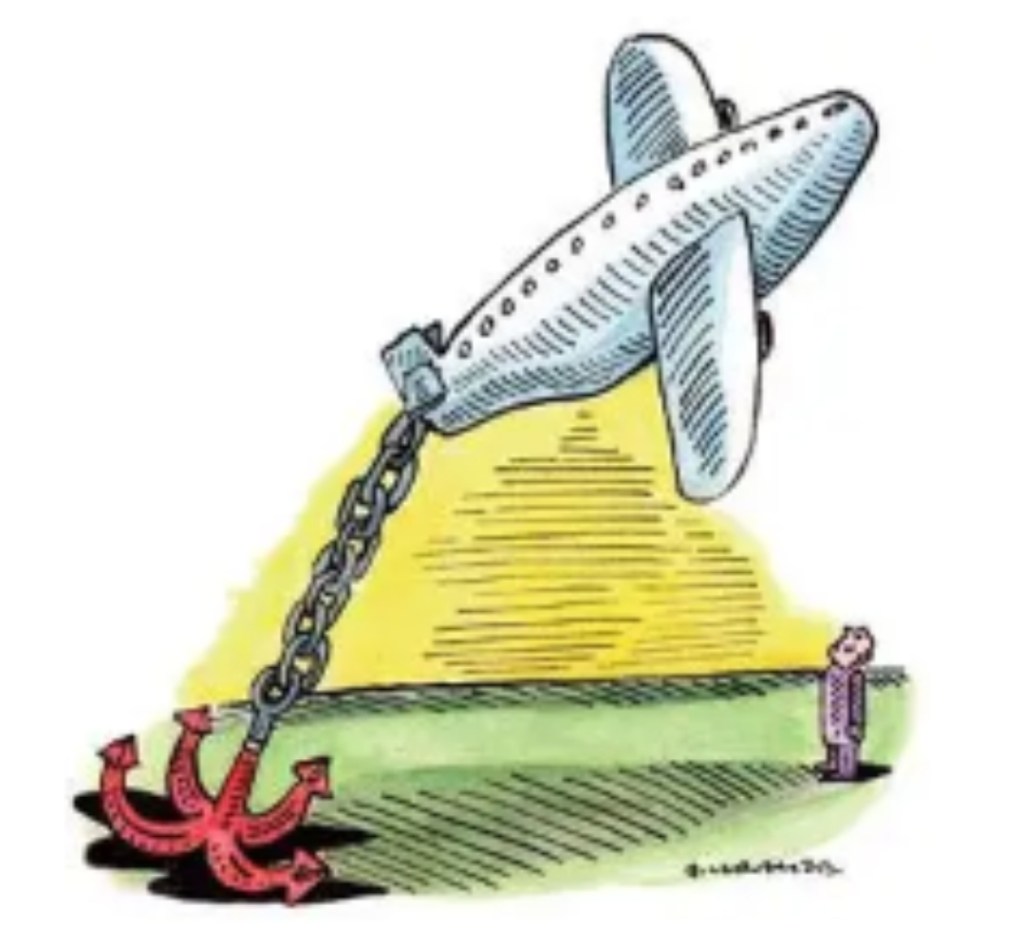
We live in a time of fear and mass docility. To crash land a truism: the best lack all effectivity whereas the worst are full of thoughtless intensity. When I invited my students one year to generate ‘altercenes’ to complicate the new geological grand narrative of the ‘Anthropocene’ (which went pop around 2004), one group offered the ‘Anxiocene.’ I thought they were onto something. How many of us face the classic neurotic’s self-imposed block against thriving—the ability to sidestep constraints and take flight, however ephemerally? These blockages are always (also) transindividual. Some retreat into Netflix, videogames, drugs, or other dopamine-hijacking fixtures/fixes of ‘high culture’ (Ronell). Others sublimate their anxious energies along busy if quietist lines (Lyotard’s ‘performativity’ or Moten and Harney’s ‘negligence’). Sometimes these groups overlap (an ‘intersectionality’ beyond the rote virtue signaling of overlaid essentialisms?). On a line of flight possibly too fearless to brake at the solar system’s limit, eccentrically juggling too many (Nietzschean) balls/calls, in the guise of the work of Dionne Brand, and possibly the novels Orbital (Harvey) and White Noise (DeLillo), as well as some andragogical ruminations (undercommons redux) and the affect theory of Sianne Ngai, this intervention (flight of fancy?) will ask why, in catastrophic times, we’re so often grounded (‘above all’ by ourselves), and what it might mean to take wing, or at least to wing it in the interim. The mystery of flight (including via Heidegger’s ‘leap’) will be intensified and some activities that look archetypically astronautical (e.g. billionaire space voyages) just won’t fly.
By day, Mark Zion plays a Torts and Green Legal Theory Instructor at the UVic Faculty of Law. In wondrous kairotic interludes, as a SOT/FOT veteran, he is grateful for this collective space of antidisciplinary play, passion, and what Haraway would include as ‘serious fun’ in her open signifier ‘SF.’ He has confronted the fear of flying on the tennis court, in the classroom, and most of all before the blank page, but mercifully (or unsurprisingly, given occasional flickers of self-negating desire) never in the skies, where in the phantasmatic realm of postpositivist non-falsifiability, he is an accomplished bush pilot.
 seismopoetics